
Louisville Resident Lookup: What Records Prove
A Louisville record check works best when each source is assigned a narrow question. The Boulder County Assessor can show a recorded owner, a tax mailing address, a situs address, and a legal description, but an owner may be a trust, business, estate, or absentee owner. A voter match can confirm a registration record, while a court docket can point to a case. Neither one proves that a person is at a Louisville address today.
| Record | What It Confirms | Where | Access |
|---|---|---|---|
| Assessor parcel and tax roll | Recorded owner, mailing address, situs, legal description, sales clues | Boulder County Assessor Property Search | Free online search; owner is not automatically an occupant |
| Voter registration | A limited registration match, status, and public voter fields | Colorado Find My Registration | Free four-field lookup; protected records may not appear |
| State and municipal courts | Party name, case pointer, docket events, and status when shown | Colorado Judicial Branch docket search and Louisville Municipal Court | Online index is not the complete file; clerk requests remain available |
| Vital and historical event sources | Birth, death, marriage, adoption, or divorce leads and family links | CDPHE Vital Records, county offices, archives, and newspapers | No public online vital search; certificates require eligibility |
| Business and professional filings | Entity identity, filed agents, credential status, and discipline when public | Colorado SOS and DORA official searches | Free public searches; a filing address is not a home address |
| Permits and planning records | Project address, applicant or contact, review, inspection, and permit trail | Louisville CSS and Boulder County records requests | Public viewing varies; some complete files require a request |
Choose the first source by the strongest clue. An address or parcel points to the assessor and recorder. A name, ZIP, and birth date fit the state voter lookup. A known case, citation, or business name narrows a court or entity search. An obituary, cemetery entry, or family date starts a historical or vital-record trail. Keeping these roles separate prevents one partial hit from becoming a false conclusion when you look up a resident.
Confirm a Louisville Person Before Following Records
The same-name trap is the main risk in a Louisville person search. Begin with at least three discriminators: the full name and variants, an approximate age or date, an address or subdivision, and a family, business, or court connection. Middle initials matter. So do maiden names, married names, shortened first names, alternate spellings, and names attached to an organization or trust.
Search the assessor by owner name, then preserve the account, parcel number, legal description, mailing address, and sale date. Search the recorder with the name and legal description instead of relying on a name alone. A clerk can often identify the right office, form, fee, or access route, but an office cannot conduct an open-ended private investigation or certify that a public match is the person being sought.
- Compare the source date with the question being asked.
- Keep residential or situs, tax mailing, registered-agent, court mailing, and historical addresses labeled.
- Use a street, subdivision, spouse or parent name, occupation, or case county to separate common names.
- Preserve exact initials, accents, and name order from the original result.
- Record a non-match as a search outcome, not proof that a person is absent.
The county’s Property Alert is a useful name signal for recorded documents, but common names can create false positives and a recording only proves that an instrument was accepted. The same caution applies to a tax card, a directory entry, a court party, or a business filing.
Louisville Voter Lookup By Four Fields
Colorado’s public voter lookup is deliberately narrow. It asks for the person’s current-record first name, last name, ZIP, and birthday in MM/DD/YYYY format. A recent move can make a search fail, so the Secretary of State advises trying the prior ZIP when appropriate. A confidential record or a person under 18 can also produce no public match. The result is a registration confirmation tool, not a list of every person at a Louisville address.
| Field | Type | Requirement or local search note |
|---|---|---|
| First | Text | Required; use the spelling on the current registration |
| Last | Text | Required; a single name may be entered here when the form calls for it |
| ZIP | Text | Required; retry an old ZIP after a recent move |
| Birthday | Date text | Required; enter the exact date as MM/DD/YYYY |
| Search control | Button | Submit control is present; the no-JavaScript extract did not expose its label |
Colorado voter-file guidance says public data can include full name, residential address, party and affiliation date, birth year, prior-election participation, and an optional phone or gender field. Full date of birth, Social Security number, driver-license or ID number, signature, and email are confidential. Ballot choices are not exposed. Authorized report products use a separate state voter data request form, which lists report and subscription options, pickup or mailing, and state contact routes. Boulder County Elections is the local contact at 303-413-7740 and vote@bouldercounty.gov for county assistance and protected-voter questions.
Note: A voter match can be current, stale, or protected, so preserve the lookup date and never treat absence as proof.
Use the Court Docket as a Louisville Case Pointer
The Colorado Judicial Branch docket search serves Boulder County trial-court matters that touch Louisville. Its filters include judicial district, county, courthouse, court type, division, date range, case year, class, sequence, individual or business party, and attorney name or bar number. Narrow the jurisdiction before judging a name match. The public result is a register-of-actions pointer, not a document viewer.
Louisville Municipal Court is a separate route for local parking, traffic, and municipal-code matters. Its municipal court search offers citation number, driver license, Social Security number, vehicle information, name, and business-name modes. The name mode uses first name, last name, and date of birth. It also has sign-in and payment functions. A sensitive search field should not be copied into a public note just because the portal displays it.
A representative docket inventory should preserve the search filters, county and courthouse, case number, year/class/sequence, division, party name and role, docket date, proceeding or event text, judge or room when shown, and status or disposition when shown.
- Filters used, including county, district, courthouse, court type, and date range
- Case number, year, class, sequence, division, and party role
- Party name exactly as indexed, including business or attorney mode
- Docket date, proceeding or event description, and judge or room when shown
- Status or disposition when shown, plus whether an image or only an index line appeared
If the question requires an actual filing, use the case number to request the file or a specific document from the court. Boulder County Combined Court lists the Boulder courthouse at 1777 6th Street, the Longmont courthouse at 1035 Kimbark Street, the main number 303-441-3750, and 20recordsrequest@judicial.state.co.us for records requests. Sealed, juvenile, domestic, and redacted material can follow different access rules. A federal case uses the registered-user PACER Case Locator, with separate fees and courthouse-terminal access.
The Colorado Judicial Branch docket portal shows the statewide search fields used in this workflow.
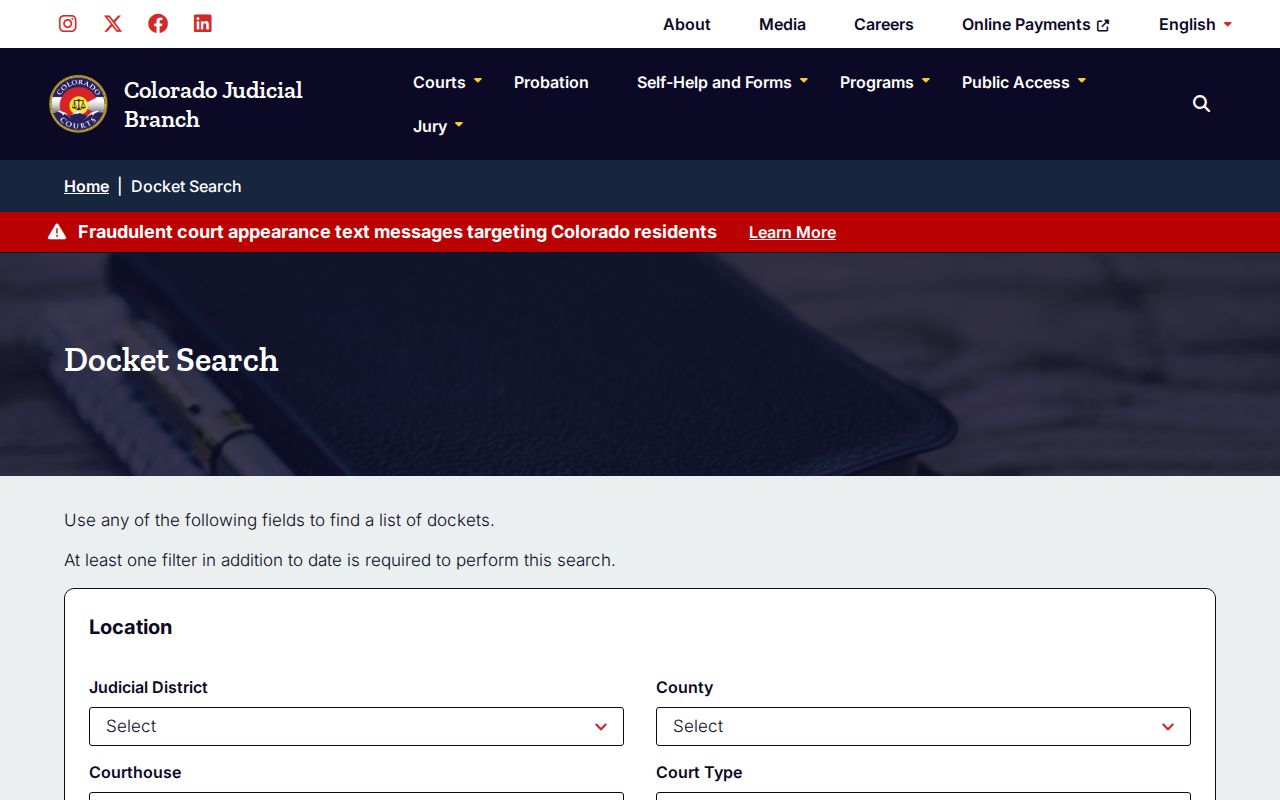
The docket screen helps separate a court case pointer from a complete case file. A case hit can identify a party without establishing a current Louisville address.
Verify a Louisville Resident Across Sources
Verification means that two or more independent records support the same identity and the same narrow claim. For example, an assessor parcel can anchor a name to an owner record, while a deed image confirms the instrument and a voter result supplies a separate registration match. The steps below keep the one-person workflow in order without treating any single record as a complete resident list.
- Write down the name, spelling variants, known address or parcel, approximate date, and the question the lookup must answer.
- Run the Boulder County assessor search and copy the account, parcel, legal description, owner, mailing address, and date exactly as displayed.
- Use the legal description or reception reference in the recorder trail, then compare the deed party with the assessor record.
- Run the Colorado voter or court search only when its required identifiers fit, and save the source date, case number, or match status.
- Ask the correct custodian for a certified copy or complete file when an index line is not enough to support the claim.
A clean match still has boundaries. A deed party may be a lender, trustee, executor, corporation, or buyer who lives elsewhere. A court party may be an attorney, creditor, witness, or business. A mailing address may belong to an agent. The evidence label is part of the result.
- Docket
- A court’s index of case events, parties, dates, and status. It points to a case but is not the full set of filings.
- Index versus image
- An index is the searchable description of a record. An image is the scanned instrument or page, which may be watermarked or unavailable.
- Certified copy
- A copy issued or certified by the custodian as an official reproduction. A screenshot or ordinary index printout is not the same thing.
Vital Records Give Leads, Not Open Name Search
Colorado treats birth, death, adoption, marriage, and divorce records as confidential under C.R.S. §25-2-117. CDPHE states that they are not public records and are not searchable online. An obituary, cemetery entry, directory notice, recorder index, or court docket can point to a likely event, but a public lead does not create eligibility for a certified certificate.
Boulder County Public Health issues certified Colorado birth records for 1904-present within its service scope. The county lists online, mail, and in-person routes through its Boulder and Longmont offices. The published office details include 3450 Broadway in Boulder, 515 Coffman Street in Longmont, weekday hours of 8:00-4:30 with a noon-1:00 closure, and phone contacts for each office. The current fee is $25 for the first copy and $20 for each additional copy of the same record ordered at the same time. The requester supplies identity and eligibility proof.
The county death-record route covers Boulder County deaths from 1901-present and asks for the decedent, date and place, relationship or purpose, identification, payment, and signature. CDPHE provides state online, phone, mail, and appointment-only in-person routes, but its live service instructions and eligibility rules control at the time of order. Marriage records follow the Boulder County Clerk and Recorder route, divorce files follow the district court clerk, and adoption access uses the state’s restricted process.
The Boulder County birth-record instructions show the eligibility, identification, fee, and submission details used for a certified request.
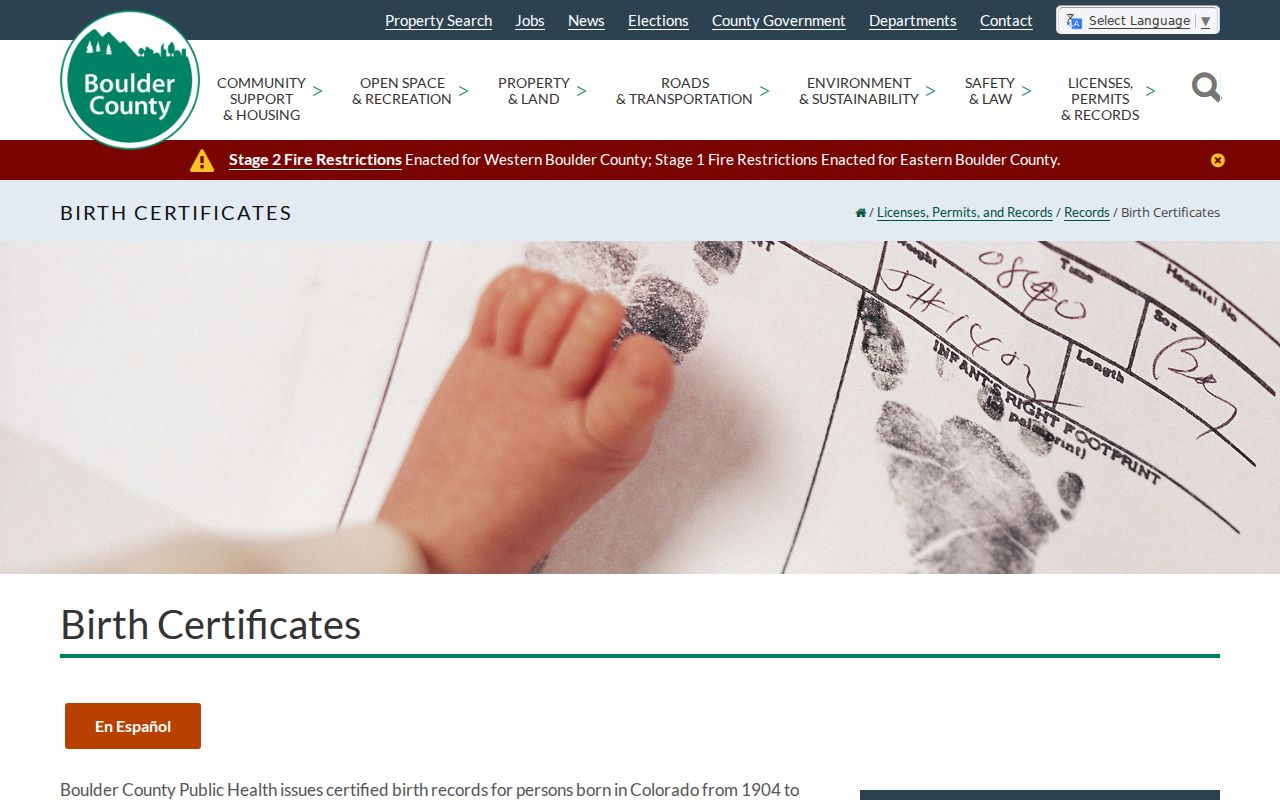
The application view reinforces the key distinction: a vital record may confirm an event for an eligible requester, but it is not a public Louisville resident search.
Historical exceptions are series-specific. Colorado State Archives birth guidance makes archival birth records available for research only when at least 100 years old. Its finding aids identify Boulder marriage, burial, coroner, birth, death, and recorded-document series with their own open or closed status. A current public opening year for every death, marriage, or divorce certificate was not verified, so the statute and the custodian’s rule should control.
Note: An obituary or cemetery entry can guide research, but only an eligible custodian can issue the certified vital record.
CBI Results Need Separate Context
The Colorado Bureau of Investigation Sex Offender Registry is a public posted-registry interface, not a complete criminal-history database or a general resident roll. The registry says that not all convicted people are listed and that statutory categories, exclusions, and posting rules control what appears. A displayed record can include name and location, address, date reported, county, designation, and physical descriptors. The registry updates hourly, so the date of a result matters.
Colorado’s name-based Internet Criminal History Check is another distinct channel. It is Colorado-only, can return several people with common names, and excludes juvenile arrests plus certain sealed or excluded records. A mail CHRI request asks for name, date of birth, optional identity details, response contact, purpose, and notarization choice. The published mail notice is three to five business days, while the online service and mail request have separate fees. A registry entry, CHRI response, court docket, and state custody record answer different questions.
The Colorado CBI public registry is the authoritative source for the public registry result and its posted limitations.
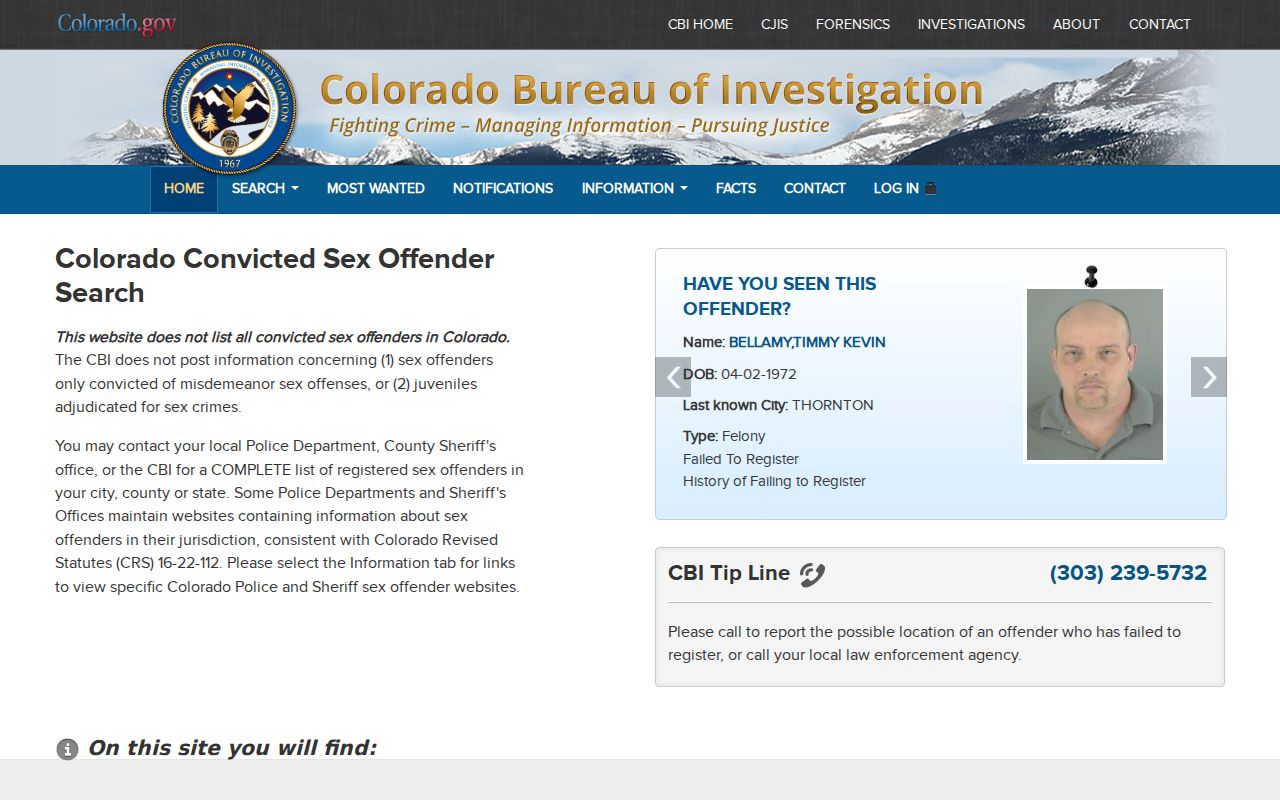
The registry result view is a reminder to retain the agency’s scope and notice with the record. A public-safety entry does not establish a person’s current Louisville residence beyond what the source itself reports.
Find a Louisville Heir Through Probate
An heir search is a lawful family-history or estate workflow, not a shortcut to a present address. Begin with a death notice, obituary, cemetery entry, or known probate case. Boulder County does not expose a separate county probate name portal in the reviewed material, so a case pointer comes through the Colorado Judicial Branch and the file request goes to the Boulder County Combined Court.
- Record the decedent’s name, death date, known Louisville address, and the newspaper or cemetery source that supplied the lead.
- Search the court docket by party and county, then preserve the case number, division, event date, and disposition fields.
- Request the probate file or the specific existing document from the court using that case number.
- Search the Boulder County recorder for a personal-representative deed, affidavit, transfer document, or deed of distribution.
- Use an eligible vital-record or court-copy route when the family relationship must be proved, and label any address as historical or source-specific.
The recorder can show the land instrument, but only the probate file establishes the court-recognized relationship. An obituary can name family members while omitting current contact details. A later deed may show a transfer without proving where an heir lives now.
Birth-Parent Research Has a Colorado Route
Birth-parent and adoption research should use Colorado’s official access process. The state route identifies C.R.S. §19-5-305, the Voluntary Adoption Registry, and a confidential-intermediary program. Adult adoptees and other eligible parties have category-specific access, and a court-appointed intermediary is not a public name index. Birth certificates remain confidential under C.R.S. §25-2-117.
Public deed, voter, directory, and newspaper fragments can help organize a family-history question, but they cannot replace the state application, identity documents, eligibility proof, or court permission required for a protected adoption record. The Colorado vital-records office is the correct starting point for current state instructions. Do not use a public match to bypass a protected person’s chosen contact or confidentiality route.
Note: A public genealogy clue can suggest a next custodian, but it cannot expand a requester’s legal eligibility for an adoption record.
Louisville Historical Clues Find Former Classmates
A former-classmate search often succeeds through local history rather than a current roll. The Louisville Historical Museum collections report more than 21,150 objects, family and house records, photographs, oral histories, newspapers, and local research material. Its online photo collection has more than 4,800 searchable photos and accepts a family name or street address as a keyword. CHNC’s Louisville Times run spans 1942-2007, while local history catalogs, yearbooks, and licensed library databases add school-year and class clues.
Pair a school year or class name with an obituary, later business filing, public historical event, or museum record. OCR can misread a surname, and a missing yearbook entry may reflect selective digitization rather than absence. The verified 1902 telephone subscribers directory includes Louisville among several Boulder County towns, but it records subscribers and institutions, not every resident. Historical directory collections and how to read their entries belong with the Louisville city directories material, while a modern name check returns to the assessor, voter, or court source.
The museum’s research route is especially useful when an old address is known but a full name is not. Keep the original spelling, town label, and street wording before translating them into a modern Louisville search.
Check Louisville Business and License Records
A business filing or professional credential can separate two people with the same name, but it does not prove that the person lives at the filing address. The Colorado Secretary of State Business Database accepts a business name, trademark, trade name, entity ID, or document number. Search tips describe 11-digit entity IDs, result sorting by ID, name, or event, pagination after 20 hits, and advanced searches using dates, business name, or an individual registrant.
Open the entity summary and preserve the entity ID, status or event history, registered-agent and principal-address fields, filing dates, and document numbers. The SOS UCC search is separate and requires a debtor name, with organization or individual mode and an option for recent lapsed records. A UCC entry is a financing notice, not a resident record. DORA’s licensee search and Colorado Health Professional Check can show credential status, discipline, restrictions, or business interests when those fields are public. Louisville permits and license categories remain distributed among city departments.
The Colorado Secretary of State business search displays the official entity and trade-name search controls.
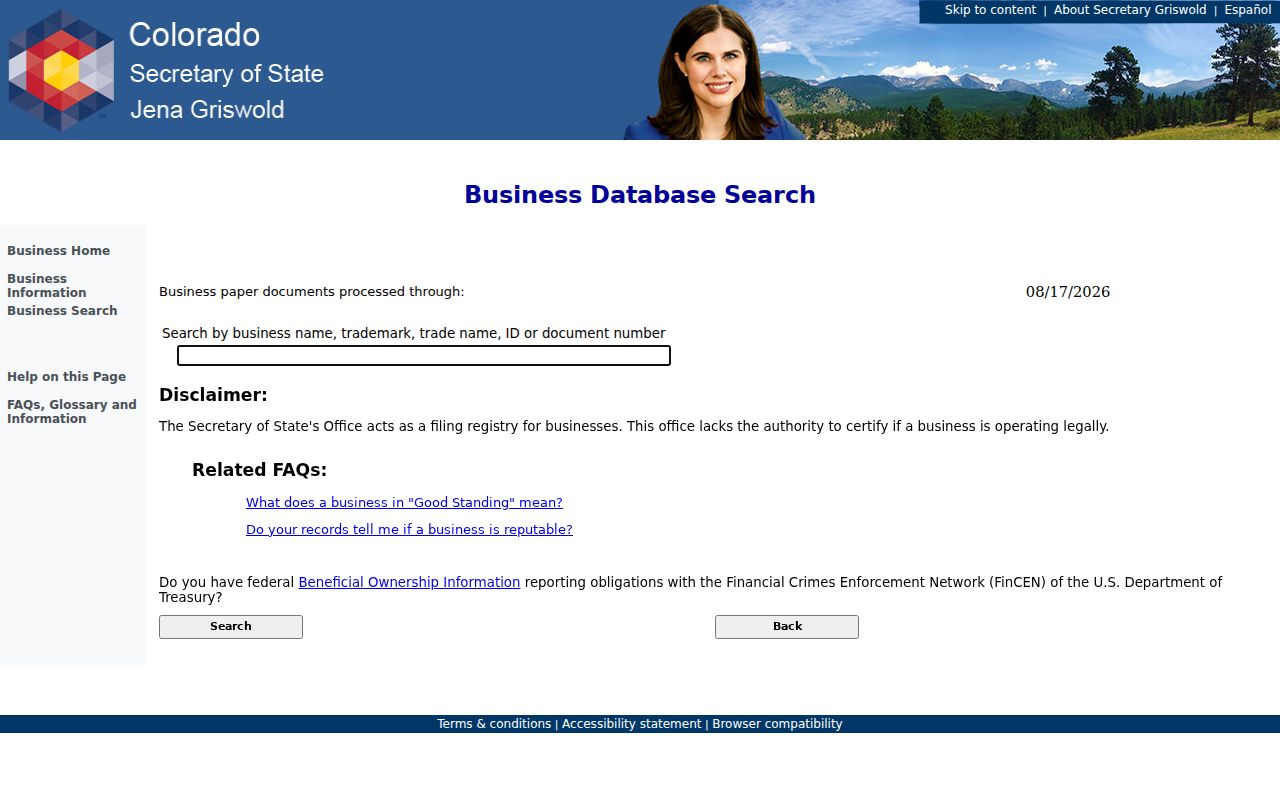
The business-search screen is useful for identity context, while the Colorado DORA license route supplies a separate credential check. Preserve the filing date and agency scope for both.
Lawful Limits for Louisville Records
Some official trails stop for a good reason. Protected voters, participants in the Colorado Address Confidentiality Program, confidential vital records, sealed court matters, restricted motor-vehicle data, private household information, and records that were never digitized may not appear. Colorado privacy law can provide access, correction, deletion, or opt-out rights against covered businesses, but a browser signal does not erase a county tax record, recorder instrument, court docket, or voter record held under another rule.
When a portal ends, ask the custodian for an existing record rather than asking an office to build a person report. Louisville City Clerk public-record requests and Colorado Open Records Act routes can identify the record type, date range, address, document number, or agency file needed. A request does not require an office to analyze data or create a new list. The custodian may apply exemptions, redactions, copy charges, or a deposit.
Another name lead is the state’s Great Colorado Payback program. A match can suggest that a person or business should check a claim, but the claimant must prove entitlement. The official Colorado unclaimed-property search is the correct route, and the state says the service is free.
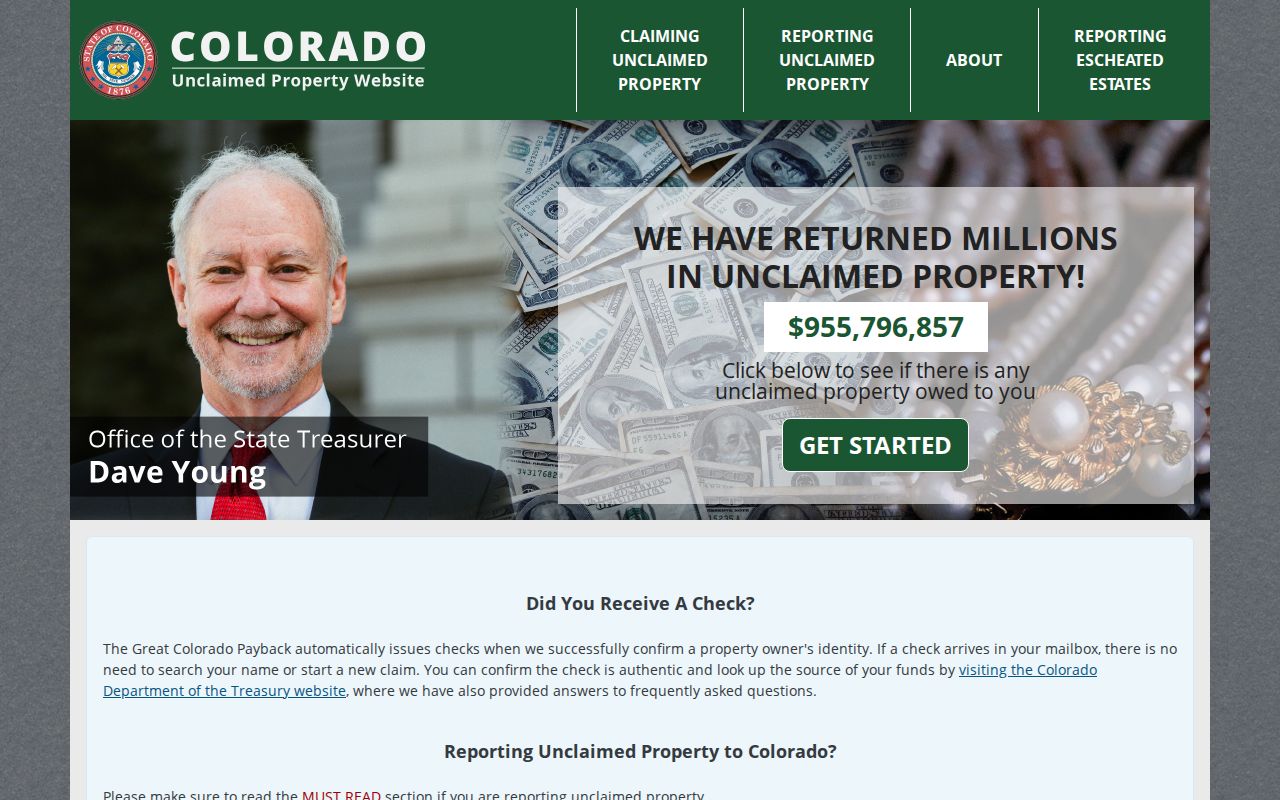
The unclaimed-property result is a name clue with a claim process, not proof of identity or current residence. The same discipline applies to every other Louisville resident lookup result.
Lawful use. Louisville records are for personal, lawful research and civic or family-history purposes. Do not use a name or address result to stalk, harass, intimidate, or harm anyone.
Note: When an official result conflicts with another source, preserve both dates and ask the custodian for correction or clarification instead of filling the gap by inference.