
Searching Louisville Resident Records
Louisville keeps no single citywide resident book. Instead, a resident lookup gets assembled from records. Different offices hold these for their own reasons. The Boulder County Assessor ties a recorded owner to a parcel. It also stores a mailing address that may not match the property address. The Clerk & Recorder indexes the parties to deeds, liens, plats, and similar instruments. Colorado's voter lookup can confirm a registration. You supply the exact name, ZIP code, and birthday. Court dockets, permits, historical city directory volumes, newspapers, and cemetery records round out the picture. They add dates and context.
Begin with your strongest clue. Then keep each source's role clear. A tax owner is not automatically a household member. A permit contact may be an architect or contractor. A street directory entry could name a renter, boarder, business, or telephone subscriber. The useful Louisville residents directory works as a chain of dated evidence. It tells you what each record can establish and where its limits begin.
- Write down the full name, spelling variants, street or subdivision, and an approximate year.
- Search the Boulder County Property Search, then save the account, parcel, legal description, and mailing/situs distinction.
- Use the Colorado voter lookup only with the required name, ZIP, and birthday, and treat a non-match cautiously.
- Search the recorder by owner, seller, subdivision, legal description, or reception number when a deed trail matters.
- Move to Carnegie, the Louisville Historical Museum, newspapers, or a narrow CORA request when the online record ends.
Where Louisville Keeps Resident Records
Boulder County serves as the main records jurisdiction for Louisville. The County Clerk & Recorder's Recording Division sits at 1750 33rd Street, Suite 201, in Boulder. That office handles deeds, deeds of trust, liens, plats, marriage and civil-union instruments, and other recorded documents. Its published phone is 303-413-7770, its email is recording@bouldercounty.gov, and its hours run Monday through Thursday, 7:30 a.m. to 5:00 p.m., with the office closed Friday. The county says its recording records reach back to 1860. The public portal does not state a separate online cutoff.
Other county offices answer different questions. The Assessor, GIS team, Treasurer, Public Health office, Elections staff, and Combined Court each cover their own slice of the records. Louisville's City Clerk is a second local gateway for city records, permits, elections, and municipal court. Any records request should name the custodian, the address or parcel, the record type, and the date range. Ask for an existing record, because Colorado Open Records Act requests do not oblige an agency to create a new analysis.
Boulder County Recording
1750 33rd Street, Suite 201
Boulder, CO 80301
303-413-7770
Boulder County Elections
Local election records route
Boulder County, CO
303-413-7740
Note: Boulder County’s countywide record systems reach beyond Louisville, so the custodian and record type matter more than a search phrase.
Check the Louisville Parcel First
The Assessor Property Search takes an address, owner name, street name, subdivision, account, parcel, or S-T-R query. A parcel card can display the situs address, account number, 12-digit parcel number, subdivision, legal description, owner, mailing address, tax year, values, sales, zoning and septic details, permits, dockets, and floodplain information. The county also publishes downloadable owner and address datasets, account and parcel files, building, land, permit, sales, tax-area, value, and GIS layers. These refresh daily at about 4:00 a.m.
Keep the situs and mailing fields side by side. In the published schema, PROPERTY_ADDRESS names the physical location. ADDRESS1, ADDRESS2, CITY, STATE, and ZIPCODE describe the mailing information. A mailing address outside Louisville may signal an absentee owner, trust, business, estate, or tax agent. It cannot identify every person living at the parcel. The county also warns that its GIS and property estimates are not survey quality. So a boundary question belongs with a licensed surveyor.
The county records gateway leads to the recorder's separate trail of legal documents. Once the parcel card gives you the legal description, that description usually bridges to older records better than a modern street spelling does.
- Roll
- A recurring government record set, such as an assessor or voter file, organized around a defined purpose.
- Index
- A finding aid with names, dates, document types, or references. An index may point to an image without containing the whole record.
- Parcel
- A mapped property unit identified by an account or parcel number and tied to a legal description.
- Criss-cross directory
- An address-to-name directory, useful for historical research but not a complete modern household list.
Louisville Voter Lookup Limits
Colorado's public Find My Registration form is a narrow identity check. It asks for First, Last, ZIP, and Birthday in MM/DD/YYYY format. The state page suggests trying a former ZIP after a recent move. It also suggests matching the registered spelling. A confidential record or a person under 18 may not appear at all. Use the interface for a known person, not to enumerate everyone at an address.
Secretary of State guidance separates public fields from confidential ones. A voter file can include full name, residential address, party, and affiliation date. It can also include birth year and prior-election participation. Optional phone or gender may appear when provided. Full birth date, Social Security number, driver-license or ID number, signature, and email stay confidential. Participation history never reveals a ballot choice. Protected voters and Address Confidentiality Program participants may be absent from ordinary results.
A statewide data request is a different channel. The Elections Division form lists public reports. It lists a $50 per-report option and a $1,000 subscription product. Pickup and first-class mailing routes are offered. Those products still carry confidentiality and lawful-use limits. The ordinary lookup cannot serve as a street-by-street Louisville residents directory.
The public voter lookup form shows its four fields and the record-protection notice. Both display before any search runs.
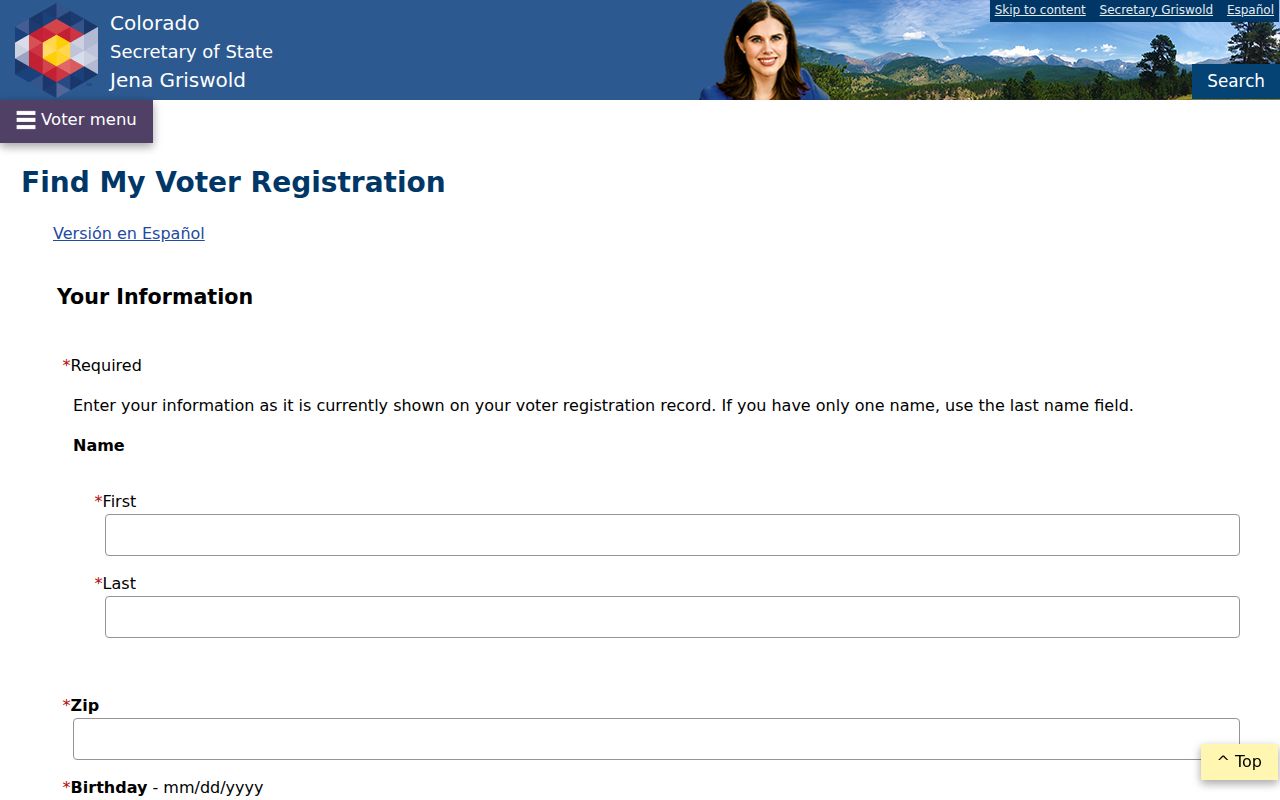
The state form shows why a voter match is one dated confirmation point. It is not a complete record of who lives at an address in Louisville.
Note: A voter match can confirm a registration without showing every resident at a Louisville address.
Current Louisville Resident Rolls
A few current sources for Louisville look like a residents directory at first glance. Each one describes a different relationship, though. The county property card, a city permit, a court party line, and a voter file can all carry the same name while answering different questions. This table keeps those roles separate.
| Source | What It Lists | Keeper | Access |
|---|---|---|---|
| Property Search | Recorded owner, parcel, mailing/situs, sales | Boulder County Assessor | Free web search and data downloads |
| Recorder index | Grantors, grantees, document types, legal descriptions | Clerk & Recorder | Free index and watermarked images; copies charged |
| Find My Registration | Known voter match and public voter fields | Colorado Secretary of State | Four-field public lookup |
| CSS and county permits | Applicants, contacts, reviews, inspections, project documents | Louisville and Boulder County | Public search; some actions need an account or request |
| City and civic pages | Departments, public contacts, wards, planning areas | City of Louisville | Free links; no resident roster located |
A solid current Louisville residents directory workflow depends on what you start with. Begin at the parcel when the address is known. With only a name, lean on three discriminators. Those are a legal description, a case number, or a business ID. The Louisville by-street records route extends the address chain street by street. Before calling any match final, cross-check the name against one of those identifiers. Preserve the source date too.
Official Rolls and Commercial Compilations
Official Louisville and Boulder County records move slowly by design. Each source answers one narrow question. The assessor owns the parcel record. The recorder accepts the instrument. The voter system matches a registration, and the court publishes only a docket pointer. A commercial compilation sits several sources on one screen. But it can merge names, repeat stale addresses, and drop corrected or protected records.
For family history, an old classmate, a seller's public filing, or a property question, the official source anchors the claim. Save the URL. Save the record date, the parcel or reception number, and the exact field that supports what you found. A free watermarked image shows where to look next. When an official copy matters, order a clean or certified one.
| Question | Best Louisville anchor | Why the distinction matters |
|---|---|---|
| Who is recorded with the parcel? | Assessor plus recorder | Owner and deed party are not automatically occupants |
| Did a known person match a registration? | Colorado voter lookup | ZIP and birthday are required; protected records may not appear |
| Who appeared at an old address? | Directory, census, newspaper, and deed chain | Occupant, owner, and household evidence must be labeled |
Louisville Historical Directory Trail
Louisville's historical directory trail runs through museum binders, Carnegie Local History, county indexes, telephone books, newspapers, and digitized genealogy collections. Carnegie holds selected Boulder County and city indexes from 1892 through 1911. A 1904 county index there includes Louisville entries. A September 1896 Boulder County Directory came from Boulder Publishing Company. It covers Louisville and other county towns. Museum references reach back to 1879 in some local binders. No complete publisher-by-year run, and no last printed year, appears online.
The Louisville Historical Museum keeps local directories, family histories, photographs, and obituaries. Its shelves also hold newspapers, a 1909 Drumm Wall Map, and a Methodist parish map from roughly 1923-25. The 1902 telephone subscribers directory lists Louisville beside other Boulder County towns. It recorded subscribers rather than every resident. CHNC's Louisville Times run, 1942 through 2007, adds searchable OCR and page images. A directory entry can point to an occupant, business, role, or address. It should never be quietly turned into a claim about a current resident.
The Louisville city directories and historical collections page walks those shelves in detail. It covers year runs and household-tracing methods too.
Louisville Museum Address Clues
The Louisville Historical Museum offers a rare address-first path. Its online photo collection holds more than 4,800 searchable photos. A family name or street address works as a keyword. A catalog number supports a reproduction request. The museum also keeps oral histories and local newspapers. It holds family and house records, plus community material from the coal-mining-era town of 1878 to 1955. Research help is available by contact and may require an appointment.
The Marshall Fire memory project helps with recent community chronology. It does not help with extracting a person list. It sorts submitted homes, neighborhood activities, organizations, and schools by region. It avoids naming people in photographs for privacy. The museum's address search and memory archive add context. They do not pretend a caption is a complete household record.
The Louisville Historical Museum collection entry point is the right place to test a street address. Widen the search to county archives from there.
Louisville Courts as Record Pointers
Louisville Municipal Court handles parking, traffic, and municipal-code infractions. Search there by citation number, business name, or vehicle information. Other routes include a driver's license and date of birth, a Social Security number and date of birth, or a name and date of birth. The visible portal centers on payment. Its no-JavaScript result state does not expose a stable field list. Treat any hit as a case pointer. Ask the Clerk for a certified judgment or the complete file when that document matters.
Boulder County Combined Court serves Louisville for county trial-court matters. The Colorado Judicial Branch docket search narrows by district, county, courthouse, court type, division, date, and case number. It also filters by individual or business party and by attorney name or bar number. A docket is not the full case file. Sealed, juvenile, domestic, and redacted materials carry their own access rules. PACER is the national federal route. It requires a registered user, and it sets its own page charges and sealing limits.
A court result can confirm a case number, an event date, and a party role. It can also confirm a status when shown. Never present a party name as proof of a Louisville address or current residence.
Note: A court docket can name a party while the complete file remains with the clerk.
Louisville ZIP Code Story
Postal records place Louisville in the 80027 and 80028 five-digit group. The 80027 last line survived the 2009 discontinuation of the Louisville Downtown Station. A current USPS location result lists a Louisville facility. It sits at 566 S McCaslin Boulevard in Superior. The lesson is worth remembering. A postal place, a delivery facility, a municipal boundary, and a parcel situs overlap, but they are not the same thing.
USPS ZIP Code Lookup accepts a full street address with unit. It also takes a city and state pair, or a ZIP code. It returns the associated cities. For any single mailing line, the live address result governs. Boulder County EagleWeb and the Assessor accept address fields plus optional ZIP entries. Yet neither promises a complete roster of Louisville parcels within a ZIP. A ZIP filter narrows a search. It never draws city limits.
Any Louisville ZIP code directory entry should preserve the exact street, unit, city, state, ZIP+4, situs address, and legal description. When those strings conflict, check the county map first. Then check the city planning layers. Do this before deciding which jurisdiction keeps the record.
Louisville Permit Dates and Contacts
Louisville's CSS Online Portal takes a permit number or a property address. Its search instructions drop directional prefixes. Type just the street number and name. A public permit record may show status, fees, plan review, contacts, attachments, inspections, and inspection results. An account unlocks applications, My Permits, uploads, and inspection requests. Boulder County Accela and permit-record search add site address, parcel number, license or permit number, contact, and date fields.
County building-permit statistics run from 2009 to the present. Older statistics take a phone route. Louisville's building-record request can seek a specific portion or a complete file through an email field and CAPTCHA. Original plans remain highly unlikely. Planning and zoning uses a separate request route for zoning verification, PUDs, subdivision plats, General Development Plans, ILCs, ISPs, and plot plans.
Permit contacts and inspection dates are project evidence. They do not prove ownership or occupancy. The Louisville CSS portal instructions deserve a read before searching any address that begins with a directional letter.
Louisville Vital Records and Obituaries
Colorado treats birth, death, adoption, marriage, and divorce records as confidential under C.R.S. §25-2-117, so none of them sit in a public name-search database. Eligible applicants must show the right relationship or a direct and tangible interest, supply identity documents, and file the custodian's application. Boulder County Public Health holds Colorado births from 1904 onward and Boulder County deaths from 1901 onward. The fee runs $25 for the first copy and $20 for each additional copy of the same record ordered together, and the current county page controls.
The Colorado State Archives opens archival birth records to researchers once they reach 100 years old. Historical marriage, burial, coroner, cemetery, and recorded-document series each carry their own access rules. An obituary, a cemetery entry, a newspaper notice, or a directory hit for a Louisville resident can be a useful lead. It still grants no eligibility for a certified certificate. CDPHE offers online, mail, and appointment routes for eligible state-held records.
The Colorado vital-records guidance walks through the confidentiality rule and the split among state, county, court, and archival custodians.
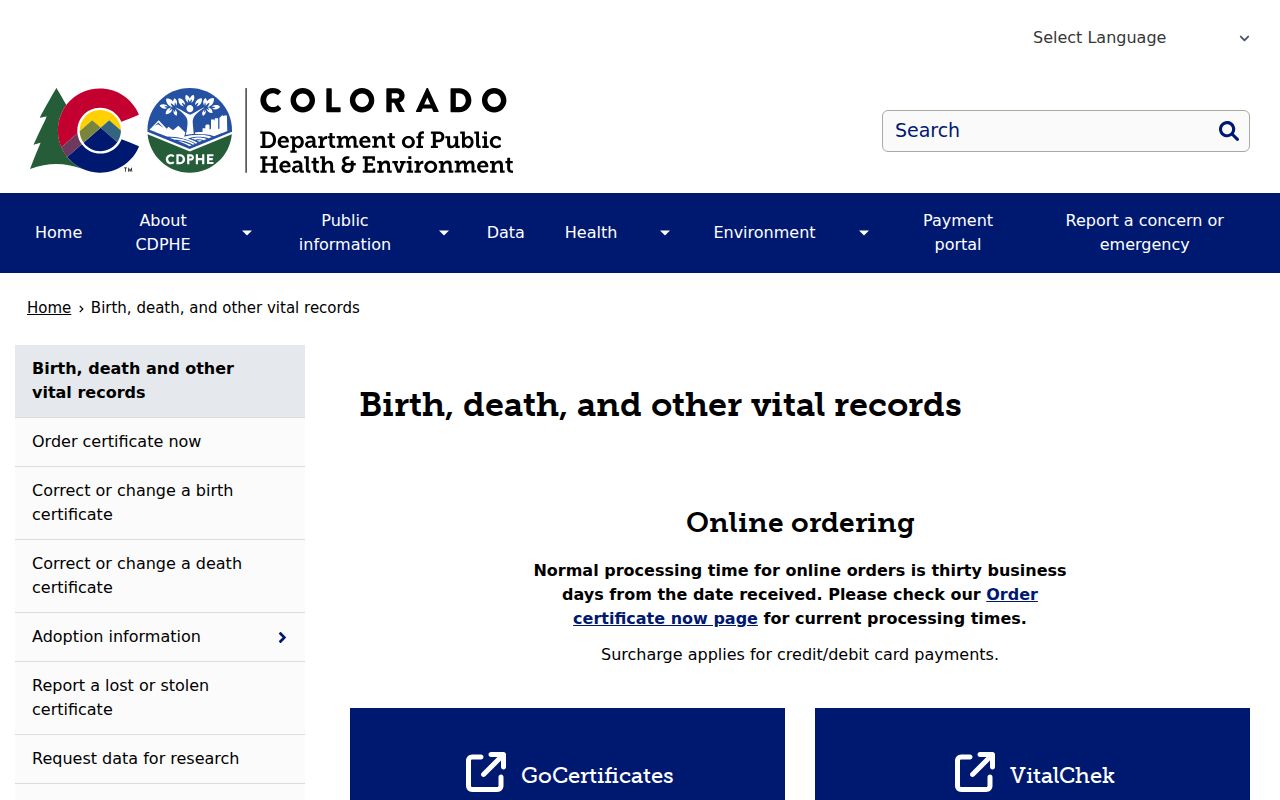
The official state access page draws the line clearly. A public historical lead and an eligible certified record request are two different things.
Note: A historical lead can identify an event without changing the eligibility rule for a certified vital record.
Louisville Privacy Protections
Colorado privacy rules explain the gaps. A careful search can look incomplete. The Colorado Address Confidentiality Program supplies a substitute address and confidential mail forwarding for eligible survivors of domestic violence, sexual offenses, and stalking, citing C.R.S. §24-30-2101 et seq. and 1 CCR 103-6. County clerks also handle confidential-voter requests. Protections grew again in 2025. New categories cover defined first responders, health-care workers, and victims.
Recorded documents stay public instruments. Boulder County warns filers not to place Social Security numbers, birth dates, or driver-license numbers in them. The Property Alert service emails recorded-document matches. Common names bring expected false positives, and a match never validates a document's legality. DMV data, utility customers, delivery records, and private household details never form a public resident layer.
The Colorado Privacy Act gives qualifying consumers access, correction, deletion, download, and opt-out rights against covered businesses, including a recognized Global Privacy Control signal. Those rights cannot erase a county deed, court docket, or voter record. Send a correction or protection question to the custodian that holds the record.
Louisville Records in 2025 and 2026
Boulder County's Clerk & Recorder has moved the bulk of its work online. More than 80 percent of transactions now happen digitally. Free watermarked images are available. Certified copies can be ordered electronically. New documents post the same day. Recording also got simpler in 2025 with a flat $43 fee. Roughly 189,000 older images still await upload or indexing. An older deed may sit in county history yet never surface in today's portal. When that happens, try a clerk request, a bound book at the records office, a State Archives finding aid, or the certified-copy route.
Fraud awareness belongs in the same workflow. A 2025 warning flagged fake Community Planning & Permitting messages and code-violation notices. These borrowed staff context to look real. A February 2026 Sheriff program brings fraud education to community groups, HOAs, senior centers, and businesses. Before paying or replying, confirm any payment demand, deed notice, or permit email. Use an official county or city URL and a phone number you looked up yourself.
A Louisville residents directory works best when every fact stays tied to its custodian. Each fact should also keep its date and its access status. That discipline keeps historical color, current records, and privacy limits in one careful chain. The Colorado voter records home is a good example. Public lookup, registration, ballot tools, military and overseas options, and confidentiality routes each remain separate entry points.
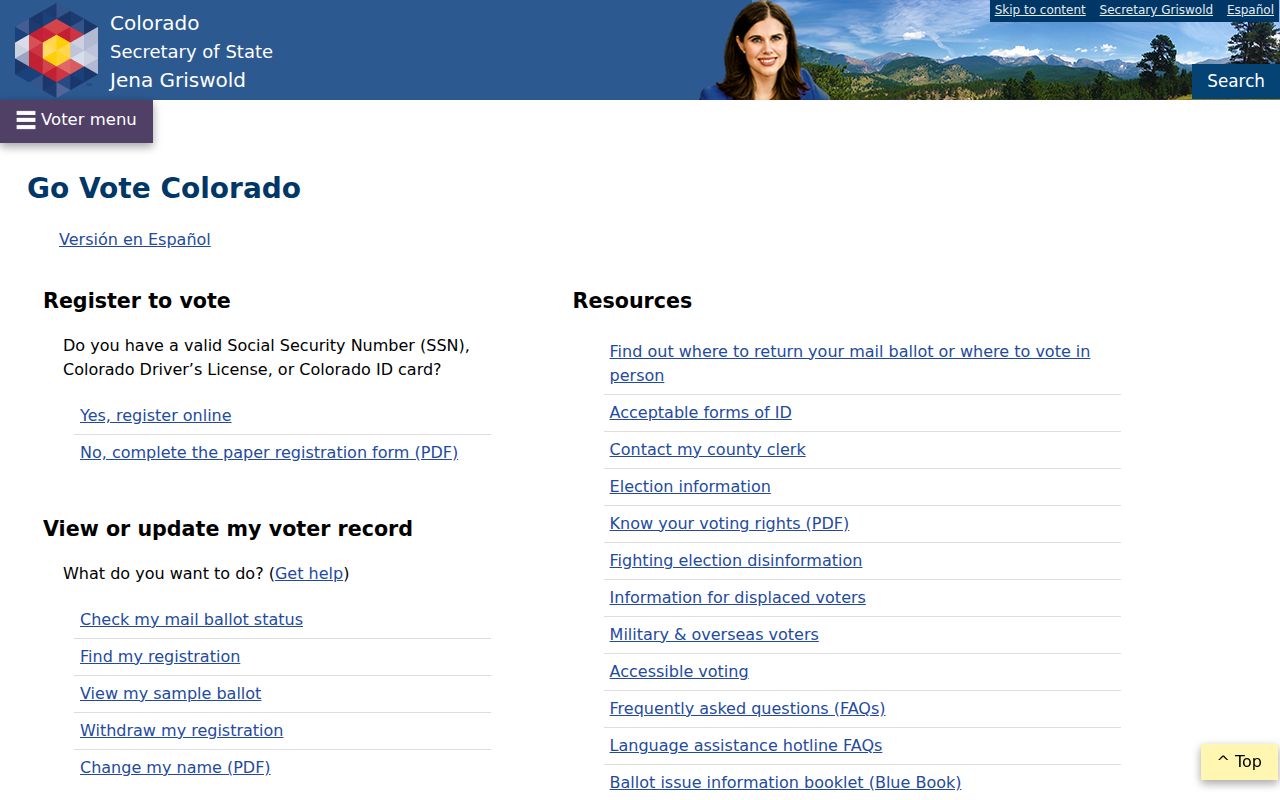
Those separate entry points help you pick the right state route. They also keep a public lookup from being mistaken for a complete resident file.